
by Xavier Cortada
Artist’s Statement
Water is everything. In South Florida, it falls as sixty inches of rain each year. It flows beneath us in the aquifer, surrounds us in the Everglades and Biscayne Bay, and shapes the land all the way to Florida Bay. Our lives are inseparable from the natural rhythms that move below and around us. Drifting in this water, too small to see but vital to life, are diatoms—microscopic organisms that capture sunlight and generate a third of the oxygen we breathe. With every breath we take, we are connected to the water, to the light, to them.
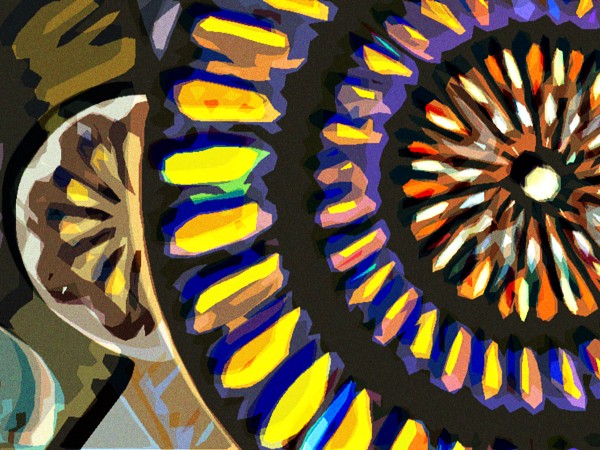
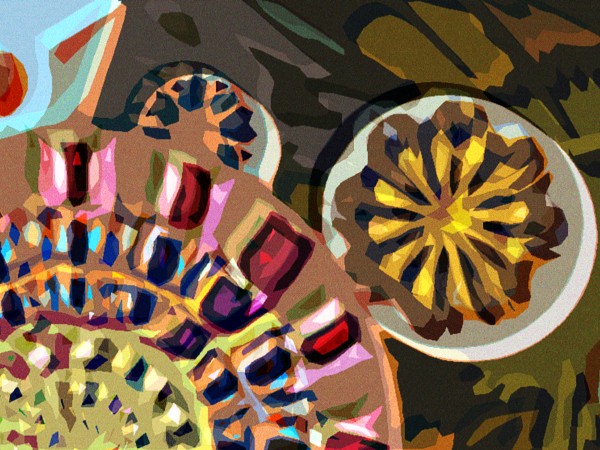
“Aqualume” celebrates these unseen forces. Through eight bold, geometric murals, diatom shapes are enlarged and illuminated with vibrant color. Painted across the built environment, they echo the organic patterns of our landscape: fluid, alive, and full of light. In revealing what is invisible, the work invites us to see how water not only supports life, but also helps create the air we breathe.

Participate
Take 5 deep breaths as you engage in the following:
- Remember your first experience in water
- Reflect on the importance of the Everglades
- Appreciate the freshwater aquifer beneath your feet
- Acknowledge the value of Biscayne Bay
- Think about how critical water is in your daily life
DIATOMS
You’re standing in front of a mural inspired by microscopic organisms that help you breathe.
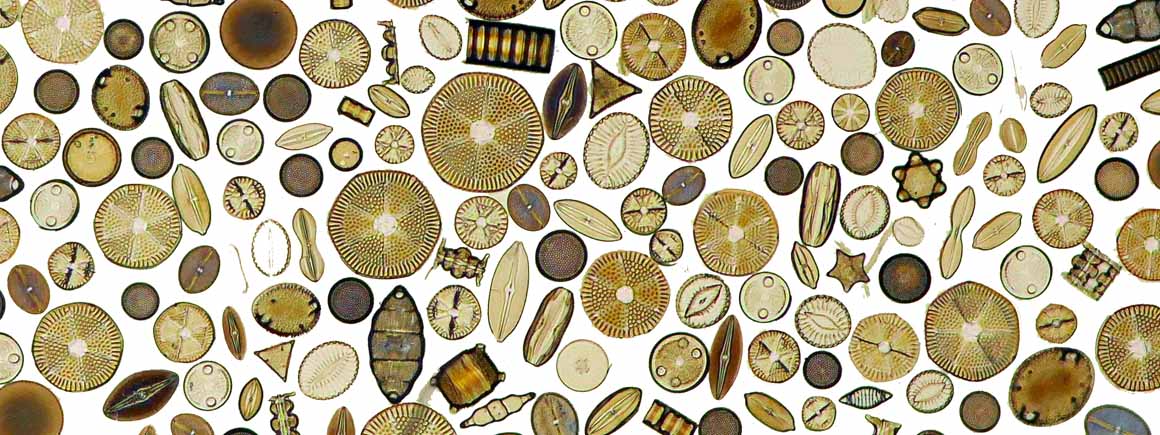
These tiny aquatic lifeforms produce about 1 out of every 3 breaths you take.
What are Diatoms?
- Diatoms are microscopic algae (phytoplankton) found in oceans, lakes, and rivers
- They have intricate glass-like shells made of silica
- Each species has a unique geometric design
They are nature’s invisible architects, beautiful and essential to the health of our planet.
why do diatoms matter?
They’re Oxygen Producers
- Produce ~33% of Earth’s oxygen (pie chart with earth)
- Support the entire marine food chain
They’re Storytellers
- Their silica shells sink and preserve a record of Earth over thousands of years
- Scientists use them to understand past climate conditions
They’re an Early Warning System
- Diatom populations are usually stable
- Sudden changes can indicate pollution, warming, or ecosystem stress
- They help us detect problems before they reach the food chain


Diatoms as storytellers:
When diatoms die, their glass shells settle to the bottom of oceans and lakes. They settle layer by layer, year after year.
These layers become a timeline. A memory. A warning.
By studying them, scientists can see when ecosystems were stable and when something changed.
From Microscopic Life to Monumental Art
Xavier Cortada draws inspiration from diatom forms and patterns. His murals and sculptures transform invisible life into public awareness, using art as a bridge between science, community, and conservation.
About the Artist
Xavier Cortada is a Cuban-American artist whose work transforms public spaces into platforms for community engagement, education, and activism. Inducted into the State of Florida Artists Hall of Fame and appointed as Miami-Dade County’s inaugural Artist-in-Residence, Cortada has been commissioned to create art for the White House, the World Bank, and CERN, among many other art, science, and government venues. A pioneer of eco-art in South Florida, he is also the only artist to create work at both of the Earth’s poles.